
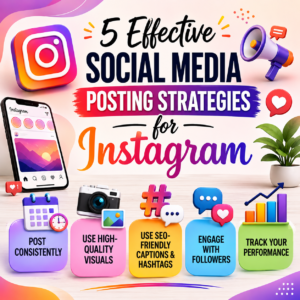
Instagram has become one of the most powerful platforms for businesses, creators, and brands to connect with their audience. But simply posting random photos is no longer enough. To grow your reach, increase engagement, and attract potential customers, you need a smart Instagram posting strategy.
In this blog, we’ll explore 5 effective social media posting strategies for Instagram that can help improve your visibility, engagement, and overall brand growth.
1. Create a Consistent Posting Schedule
Consistency is the foundation of Instagram growth. When you post regularly, your audience becomes familiar with your content, and Instagram’s algorithm is more likely to push your posts to a wider audience.
Why Consistency Matters
- Builds audience trust
- Increases profile activity
- Improves engagement rates
- Helps your followers expect new content
Best Practices
- Post at least 3–5 times per week
- Use Instagram Insights to find the best posting times
- Schedule content using tools like Meta Business Suite or Buffer
SEO Tip
Use keywords naturally in your captions, such as:
- Instagram marketing tips
- social media posting strategy
- Instagram growth strategy
2. Focus on High-Quality Visual Content
Instagram is a visual platform, so content quality directly affects engagement. Eye-catching images, clean graphics, and short-form videos perform much better than low-quality posts.
Types of Content That Perform Well
- Reels
- Carousel posts
- Behind-the-scenes content
- Product showcases
- Educational graphics
Tips for Better Visuals
- Use natural lighting
- Maintain a consistent color theme
- Add branding elements like logos or fonts
- Keep designs clean and professional
Why Reels Matter
Instagram currently prioritizes Reels because video content keeps users engaged longer. Short, informative, and entertaining Reels can significantly increase your reach.
3. Use Strategic Hashtags and Keywords
Hashtags help Instagram understand your content and show it to relevant users. Combining hashtags with SEO-friendly captions improves discoverability.
How to Use Hashtags Effectively
Use a mix of:
- Popular hashtags
- Niche hashtags
- Location-based hashtags
- Brand-specific hashtags
Example Hashtags
- #InstagramMarketing
- #SocialMediaStrategy
- #DigitalMarketingTips
- #InstagramGrowth
- #SmallBusinessMarketing
Caption SEO Tips
Instagram now indexes keywords, so include searchable phrases in your captions, such as:
- “Best Instagram posting strategy”
- “How to grow on Instagram”
- “Social media marketing tips”
4. Engage With Your Audience Daily
Posting content is only half the strategy. Engagement is what builds community and improves visibility.
Ways to Increase Engagement
- Reply to comments quickly
- Respond to DMs
- Use polls and questions in Stories
- Comment on posts from similar accounts
- Encourage followers to save and share posts
Example CTA (Call-To-Action)
- “What do you think? Comment below!”
- “Save this post for later.”
- “Tag a friend who needs this.”
The more interaction your content receives, the more Instagram promotes it to others.
5. Analyze Performance and Improve Your Strategy
Successful Instagram marketing requires regular analysis. Tracking your performance helps you understand what content works best.
Important Metrics to Track
- Reach
- Engagement rate
- Saves and shares
- Follower growth
- Reel views
- Website clicks
Tools You Can Use
- Instagram Insights
- Meta Business Suite
- Google Analytics
- Social media scheduling tools
Optimization Tips
- Post more of what performs well
- Test different content styles
- Experiment with posting times
- Track competitor strategies
A successful Instagram strategy is not about posting more — it’s about posting smarter. By maintaining consistency, creating quality visuals, using SEO-friendly captions, engaging with your audience, and tracking your results, you can build a strong Instagram presence and grow your brand effectively.
Whether you’re a business owner, content creator, or digital marketer, these Instagram posting strategies can help you achieve better engagement and long-term growth.